 PORT MOBILITY CIVITAVECCHIA


Rome: The 8 Most Beautiful Free Parks to Visit
Discover the Ranking of the Best Free Urban Parks in Rome.


Rome is not only iconic monuments and timeless art: the Eternal City is also a surprising green lung, rich in parks, historic villas, and gardens where nature and culture meet. From the vast expanses of Villa Borghese to the paths immersed in the quiet of the Appian Way, all the way to lesser-known yet equally fascinating corners, Rome’s parks offer a unique experience for both residents and tourists.
In this article, you will discover the most beautiful free parks in Rome, ideal for walks, outdoor sports, and moments of relaxation away from the city’s chaos. Together, we will explore the best green areas of the capital, with useful tips and plenty of interesting facts...
1. Villa Borghese
Among the most famous and central parks in Rome is Villa Borghese. In fact, this wonderful public park is located between Piazza di Spagna and Piazza del Popolo.
With its 80 hectares of history, art, and entertainment, it is a magical place surrounded by greenery, where both residents and tourists spend their time outdoors.
BOOK YOUR SKIP THE LINE TICKET TO THE BORGHESE GALLERY NOW
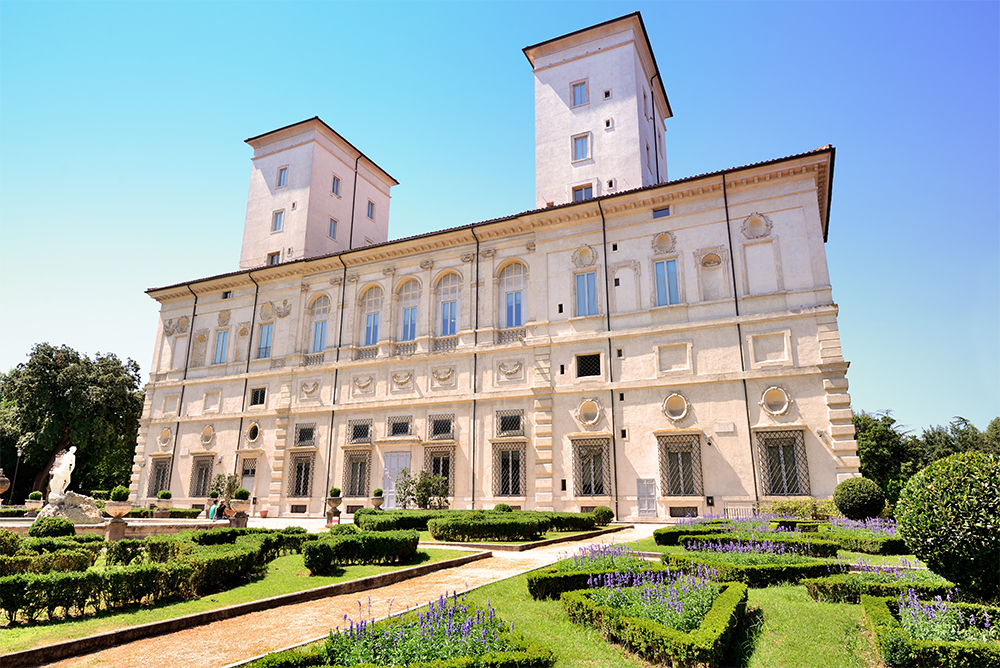
Villa Borghese a Roma
Several attractions can be admired in this open-air museum, including:
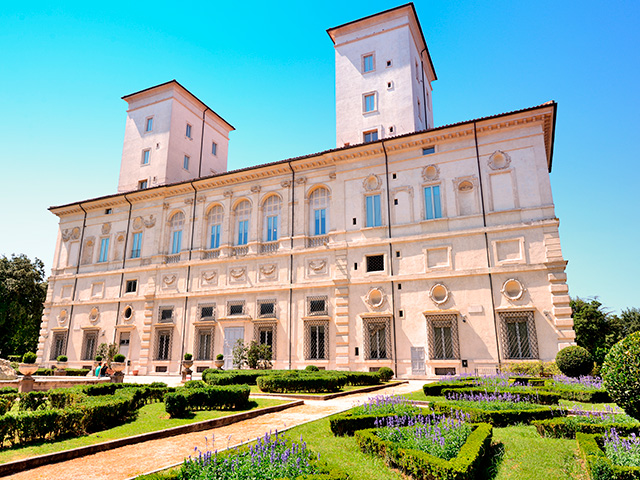
- Galleria Borghese: without a doubt the most famous in the park. A true jewel that houses masterpieces by Caravaggio, Gian Lorenzo Bernini, Antonio Canova, Raphael, and Titian. The entrance to the Galleria Borghese requires a ticket.
- Historic buildings: the Casino del Graziano, the Casino Giustiniani, the Uccelliera, and the Meridiana, along with their wonderful secret gardens.
- Neoclassical and 19th-century buildings: the Casino dell’Orologio, the Fortezzuola, and the large Giardino del Lago, famous for the Temple of Asclepius, which can be reached by boat.
- Pincian Terrace: one of the most beautiful panoramic terraces in all of Rome, overlooking Piazza del Popolo.
- Carlo Bilotti Museum: located inside the Orangery, it houses modern works, including paintings by Giorgio de Chirico and Gino Severini.
- Silvano Toti Globe Theatre: a reconstruction of William Shakespeare’s Elizabethan theatre, commissioned by Gigi Proietti. In summer, it hosts numerous performances.
- Bioparco di Roma: one of the oldest zoos in Europe, now transformed into a modern zoological garden. Perfect for families with children.
2. Villa Doria Pamphili
Villa Doria Pamphili is one of the largest parks in all of Rome, second only to the park along the Appian Way, which we will explore shortly. It covers an impressive 184 hectares and can be accessed from four main entrances: Via Aurelia Antica, Via San Pancrazio, Via Leone XIII, and Largo Casale Vigna Vecchia.
There are several points of interest within this wonderful green lung of the city that are well worth a visit. Here are the most important:
- Casino del Bel Respiro, first and foremost. It is an ancient palace inspired by Villa Adriana, surrounded by a beautiful secret garden.
- Valley of the Deer (Valle dei Daini), a 60,000 sqm area that in the past was the hunting reserve of the Pamphili family.
- Belvedere Lake (Lago del Belvedere), a natural lake surrounded by various types of trees, beautiful paths, and no fewer than three scenic viewpoints.
- Fountains of Villa Pamphili, including the Fontana del Mascherone, the Fountain of Venus, the Fountain of the Lily, the Fountain of the Tiber, the Fountain of the Snails, the Fountain of Cupid, and the Cascade Fountain—each more beautiful than the last.
In addition, inside the park you will find the Villa Vecchia, the Doria Pamphili Chapel, the theatre garden, and much more.
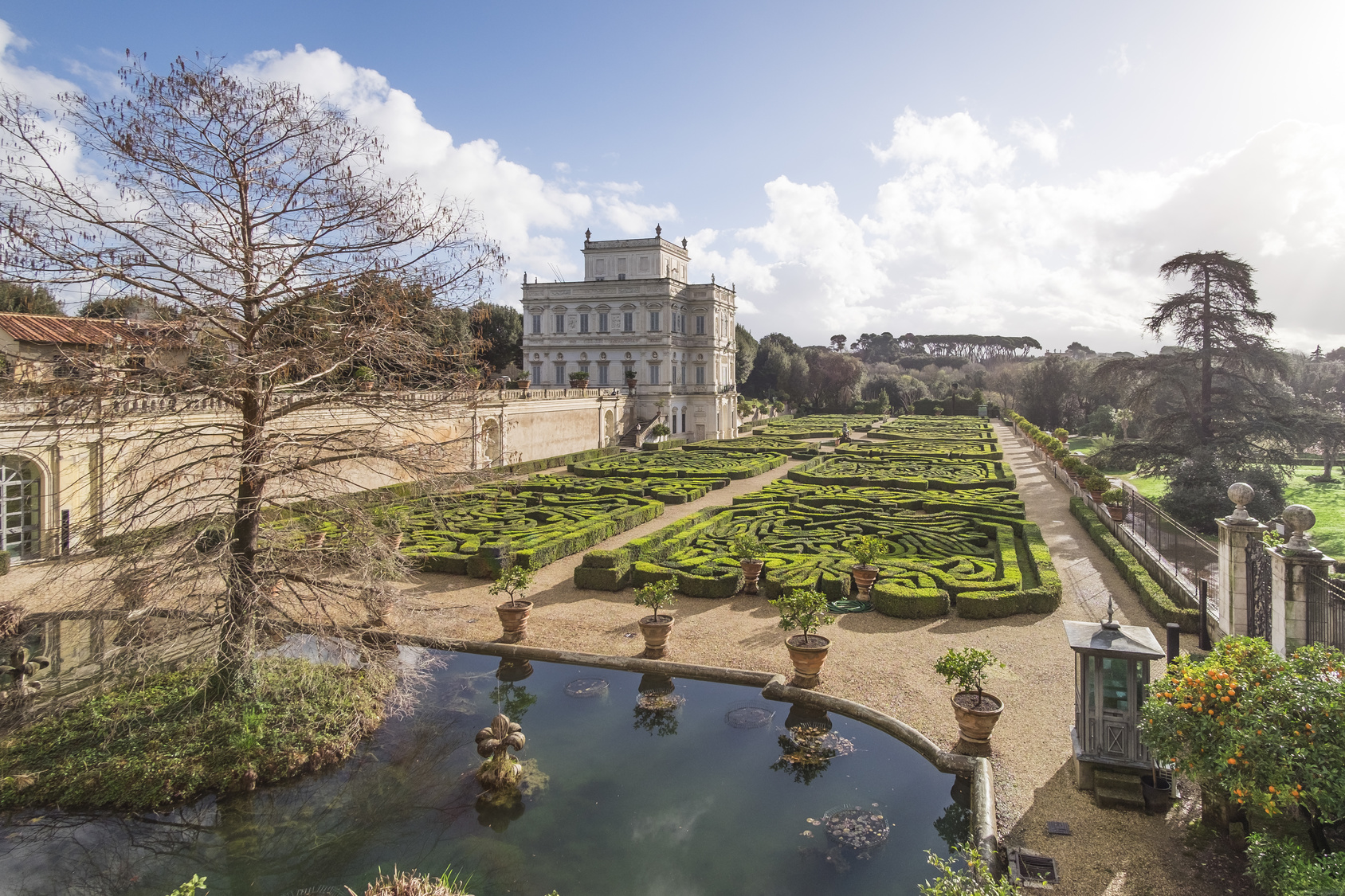
Casino del Bel Respiro a Villa Pamphili a Roma
3. Villa Torlonia
Located on Via Nomentana, not far from the Coppedè District, Villa Torlonia is not just a simple park but a true historical and architectural journey through Rome.
Originally owned by the Pamphilj family, it was later purchased in 1760 by the Colonna family and, at the end of the 18th century, sold to the banker Giovanni Torlonia.
From 1925 to 1943, rented by the latter for one lira per year, the villa became the official residence of Benito Mussolini. He lived in the Casino Nobile of the villa, where he had air-raid shelters and an underground bunker built. Today, these can be visited and are part of the Musei di Villa Torlonia, together with an important collection of works from the Scuola Romana.
In addition to the Casino Nobile, the park also includes the Casino dei Principi, the Scuderie, and the beautiful Casina delle Civette, a rare and stunning example of Art Nouveau architecture.
PRIVATE TOUR VILLA TORLONIA AND COPPEDÈ DISTRICT
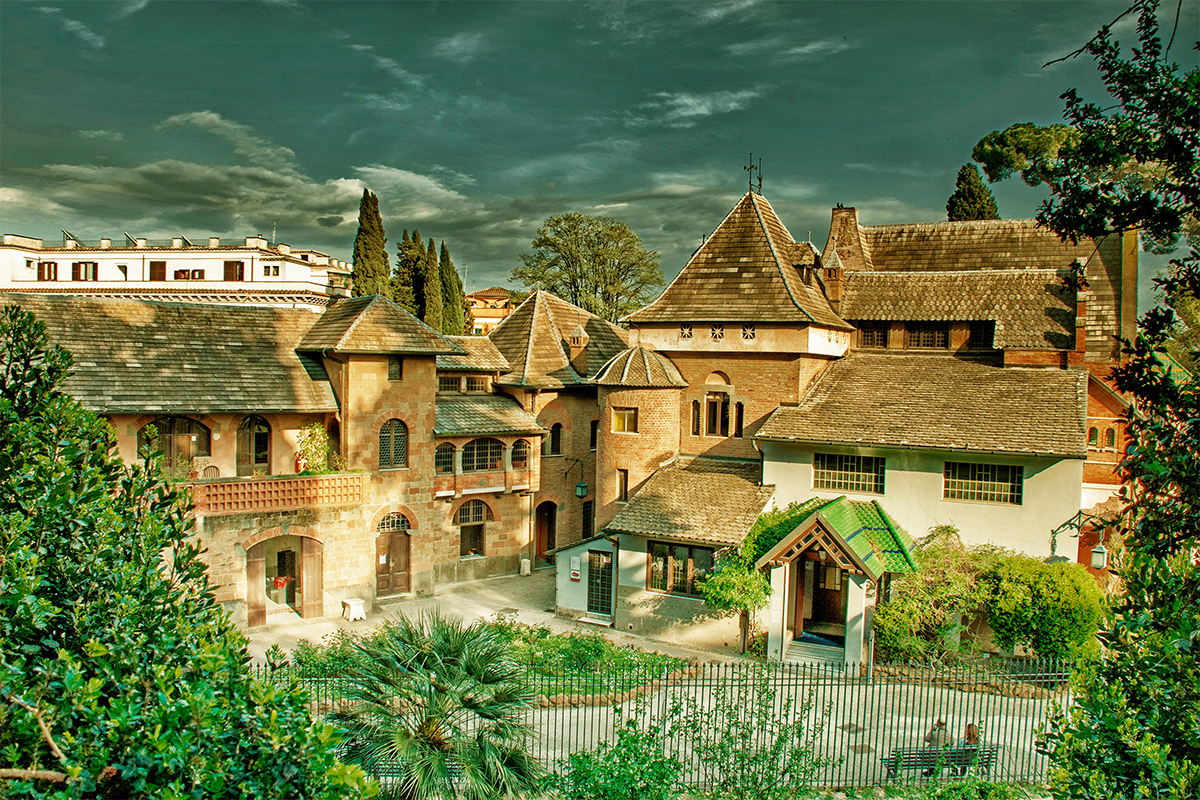
La bellissima Casina delle Civette a Villa Torlonia - Roma
4. Villa Ada
Another urban park worth visiting, near the Parioli district, is Villa Ada, also known as Villa Ada Savoia.
Accessible from four entrances: Via Salaria, Ponte Salario, Via di Monte Antenne, and Via Panama. it is a 160 hectare green lung.
Among the owners of Villa Ada stand out the Pallavicini family in the 18th century and the House of Savoy from 1872 to 1878 and again from 1904 to 1946.
Inside, it is possible to admire:
- Casale known as “La Finanziera”, on the hill of the same name, now headquarters of the WWF.
- Casino Nobile, today home to the Embassy of the Arab Republic of Egypt.
- Fienile, used as an equestrian center by the Cascianese association.
- Casale delle Cavalle Madri, so called because, during the Savoy period, it was used as a shelter for mares about to give birth, coming from the stables of the Quirinal Palace.
- Remains of Antemnae, one of the oldest cities in Lazio.
- The historic bunker of the villa, which can now be visited after more than five years of closure.
- Numerous neoclassical and eclectic buildings, such as the Temple of Flora (a coffee house near the Casino Pallavicini), the Royal Villa, Villa Polissena, the Royal Stables, the Swiss Chalet, and the Gothic Tower.
It is a true hidden gem in the heart of Rome, absolutely not to be missed!
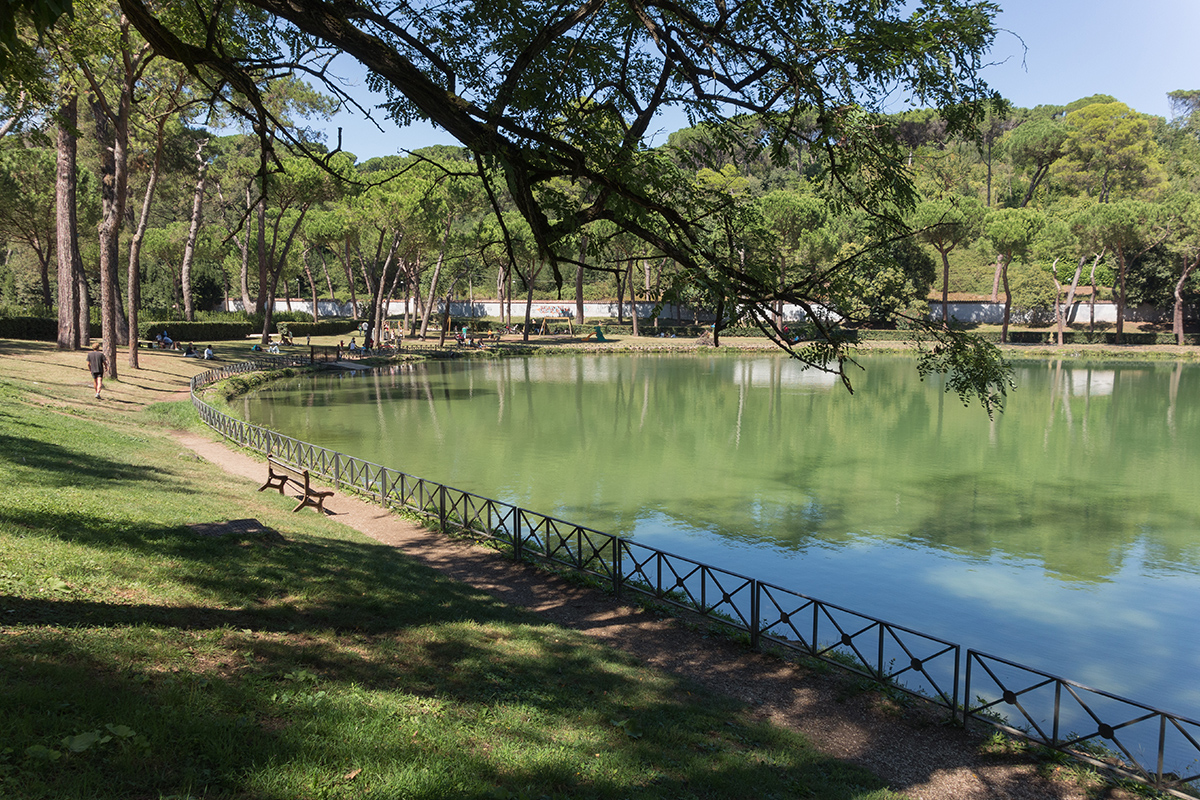
Villa Ada a Roma
5. Appian Way Regional Park
Appian Way Regional Park, with its 4,580 hectares, is the largest in Europe!
A true open-air museum, where archaeology, nature, and biodiversity come together, creating one of the most evocative locations in all of Rome.
The park is divided into several areas of interest, specifically:
- Appian way, just mentioned, the Regina Viarum (Queen of Roads), is undoubtedly the central part, where for about 16 km historic rural estates stretch out, interrupted by spectacular remains of imperial villas and aqueducts.
- Caffarella Valley, located near the Aurelian Walls.
- Aqueduct Park, a true crossroads of the water network, with the remains of a system of six aqueducts from Ancient Rome. It covers about 240 hectares between the Appio Claudio district, Via delle Capannelle, and the Rome–Cassino–Naples railway line.
- Tor Marancia, where the presence of several necropolises testifies to the important position of the area on the edge of the city and along two major routes: the Ardeatina and the Laurentina roads.
- Tenuta Farnesiana.
- The areas of Divino Amore, Falcognana, and Mugilla.
This regional park is so vast that it extends across three municipalities: Rome, Ciampino, and Marino. It is perfect for exploring on foot, but especially by bike, either independently or with a guided tour.
The park is easily reachable both by public transport (bus and metro) and by private vehicles (although with some restrictions in certain areas). For more information, click here.
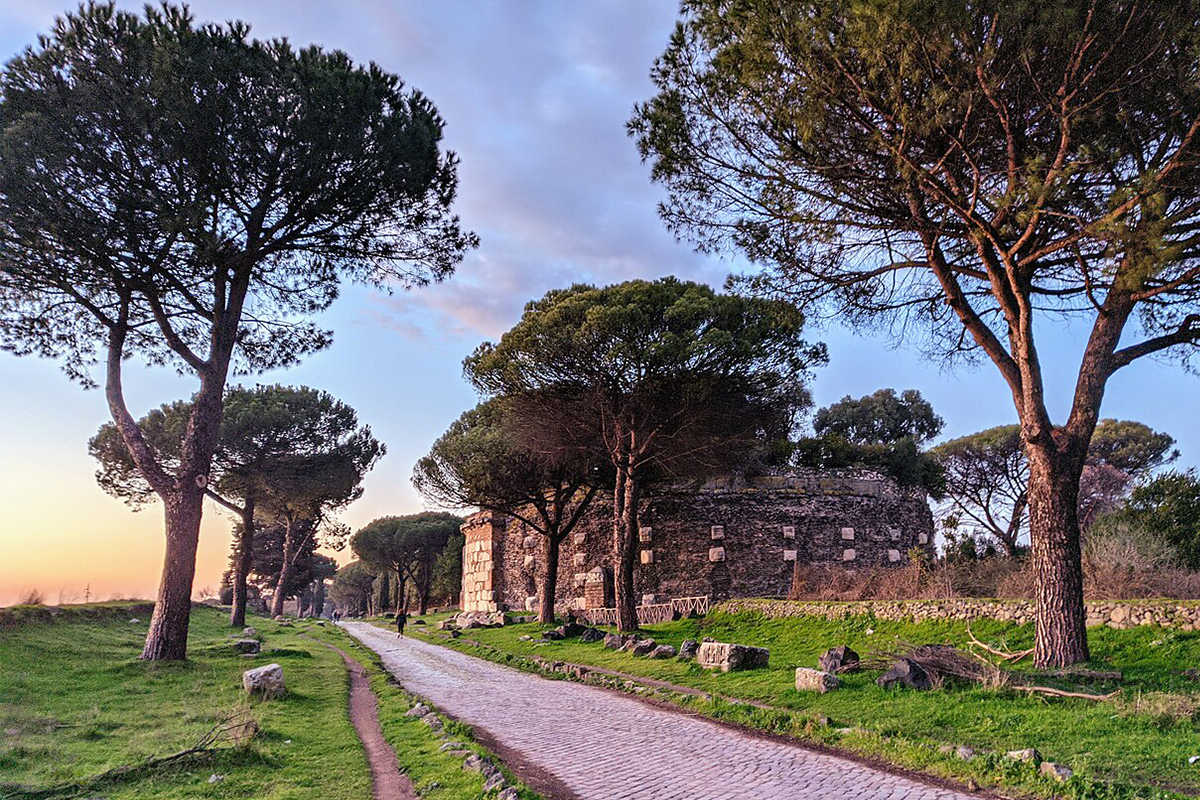
Regina Viarum - Parco regionale Appia Antica. Foto di Luisa V72 - Fonte: Wikipedia CC BY-SA 4.0
6. Eur Central Lake Park (EUR "Laghetto")
If you are exploring the Eur district in Rome, one urban park you absolutely cannot miss is the Eur Central Lake Park commonly known as the “Laghetto dell’Eur.” This stunning green space spans 160,000 square meters and features a beautiful artificial lake covering 85,120 square meters.
The area is lush with oak, poplar, magnolia, olive, and maple trees, alongside rare specimens of cherry laurel, pittosporum, and various species of conifers. Most notably, the park is famous for its magnificent Sakura (Japanese cherry trees). You can admire these blooms along the "Japanese Promenade" (Passeggiata del Giappone) during the Hanami festival, which typically takes place between mid-March and early April.
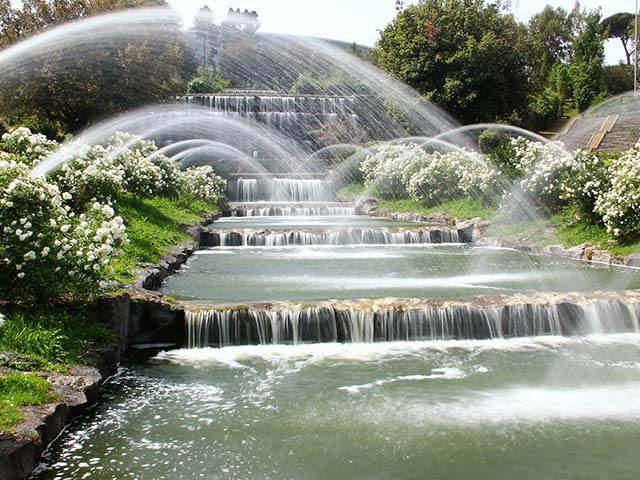
Also, be sure to visit the Waterfall Garden, where water jets, cliffs, natural stones, and lush vegetation create a truly evocative atmosphere. The pedestrian Hashi bridge arches over the main waterfall, offering the perfect spot to take breathtaking photos of the park.
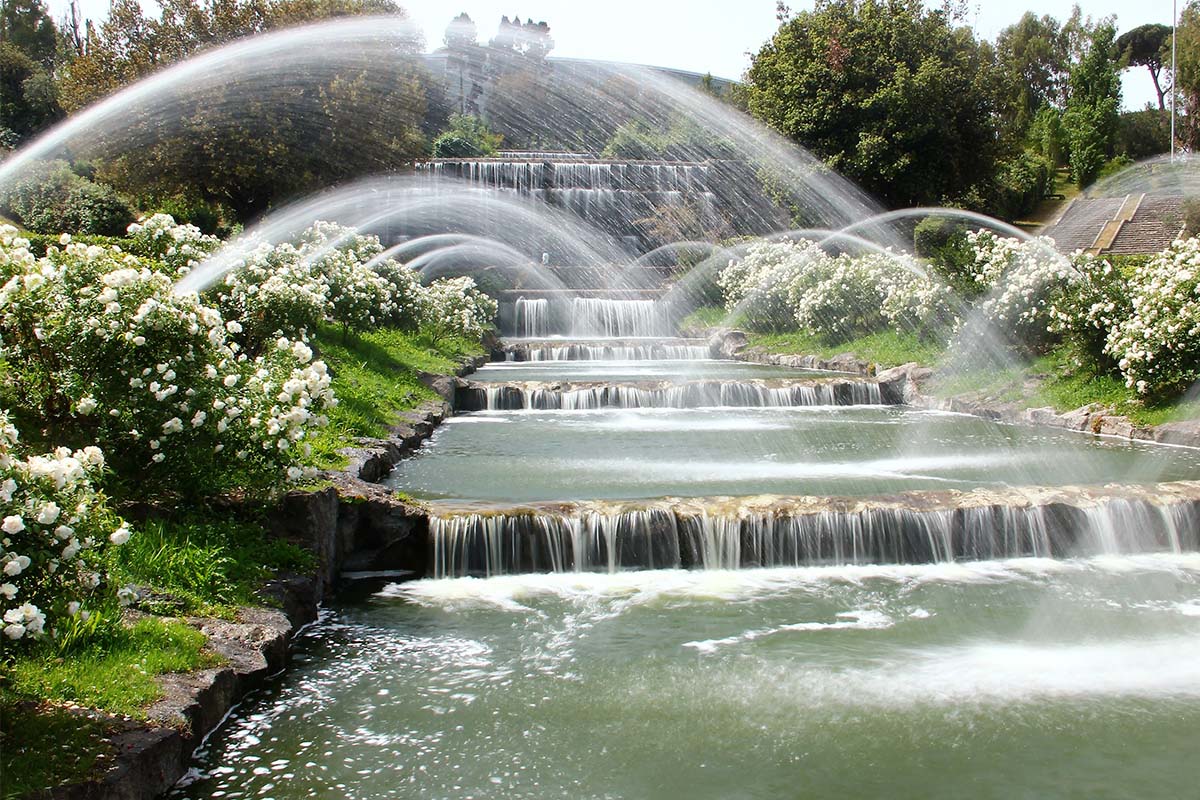
Il giardino delle cascate al parco del Laghetto dell'Eur
7. Colle Oppio Park
The Park of Colle Oppio is a true archaeological garden of about 11 hectares in the beautiful Rione Monti, in the heart of the city. Inside, in fact, it is possible to admire the remains of the Domus Aurea, the Baths of Titus, and the Baths of Trajan.
From here, it is also possible to enjoy a stunning view of the Colosseum and the Palatine Hill, ideal for capturing truly “wow” photos!
The garden develops along two main avenues (Viale della Domus Aurea and Viale Mizzi), equipped with monumental entrances and enriched by a series of fountains such as the "Fontana delle Anfore" and the "Fontana del Ninfeo".
In addition, there is a children’s playground, a basketball court, and a skate park.
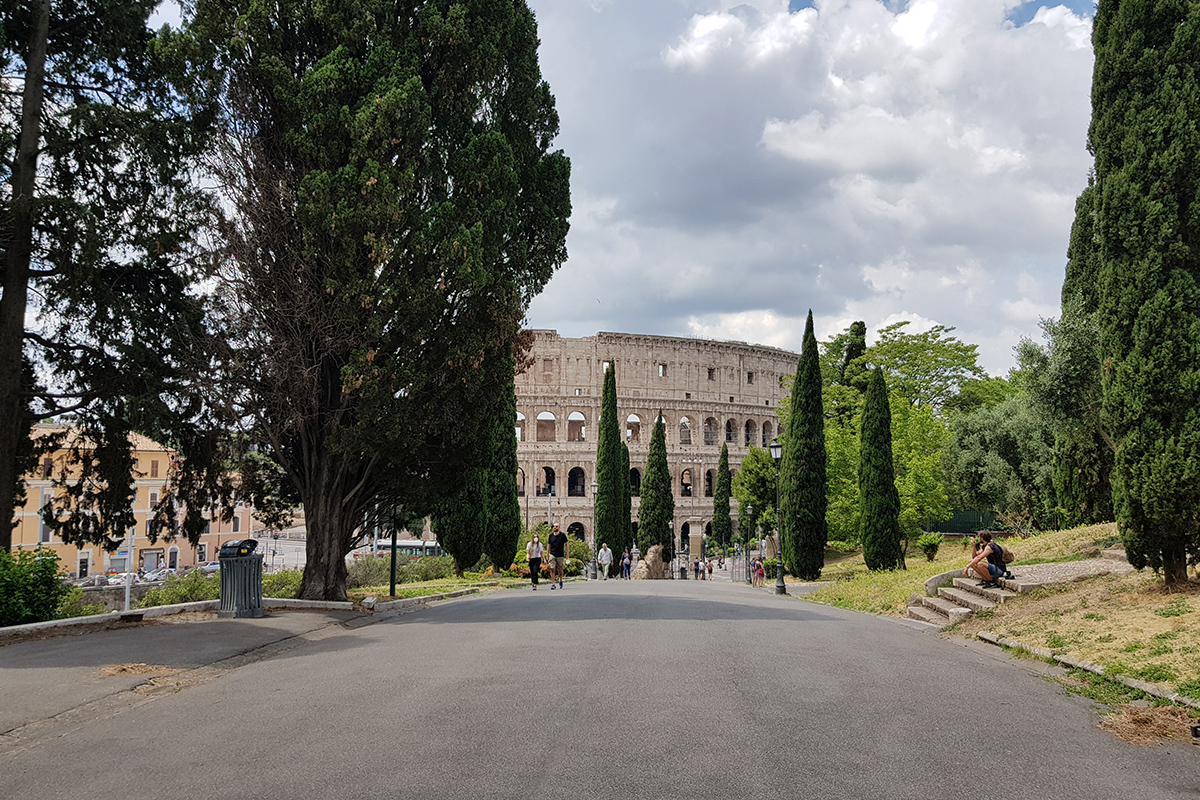
Vista dall'entrata del Parco di Colle Oppio a Roma
8. Orange Garden (Savello Park)
The last of the most beautiful parks in Rome is a hidden gem that not everyone knows about. It is Savello Park, also known as the Orange Garden.
It is located at the top of the Aventine Hill (Rione Ripa), near the famous keyhole viewpoint and the Circus Maximus. A hidden and mysterious place where you can admire a spectacular view over the whole city.
Covering about 8,000 square meters, it was created in 1932 by the architect Raffaele De Vico on the site that once hosted the fortress of the Savelli family.
The main avenue is named “Nino Manfredi”, in honor of the actor Nino Manfredi. From its center, it is possible to admire the dome of St. Peter's Basilica from a truly unique perspective.
Not only that, you can also see some of the most beautiful landmarks of Rome, such as the Tiber River, the temples of the Forum Boarium, the Janiculum Hill, and the Tiber Island.
Inside the park there is also a central square dedicated to the actor Fiorenzo Fiorentini and a fountain designed by Giacomo della Porta.
Of course, the entire park is surrounded by fragrant bitter orange trees. This is where the garden gets its name.
An ancient legend even says that these oranges are miraculous… but be careful: picking them is strictly forbidden!
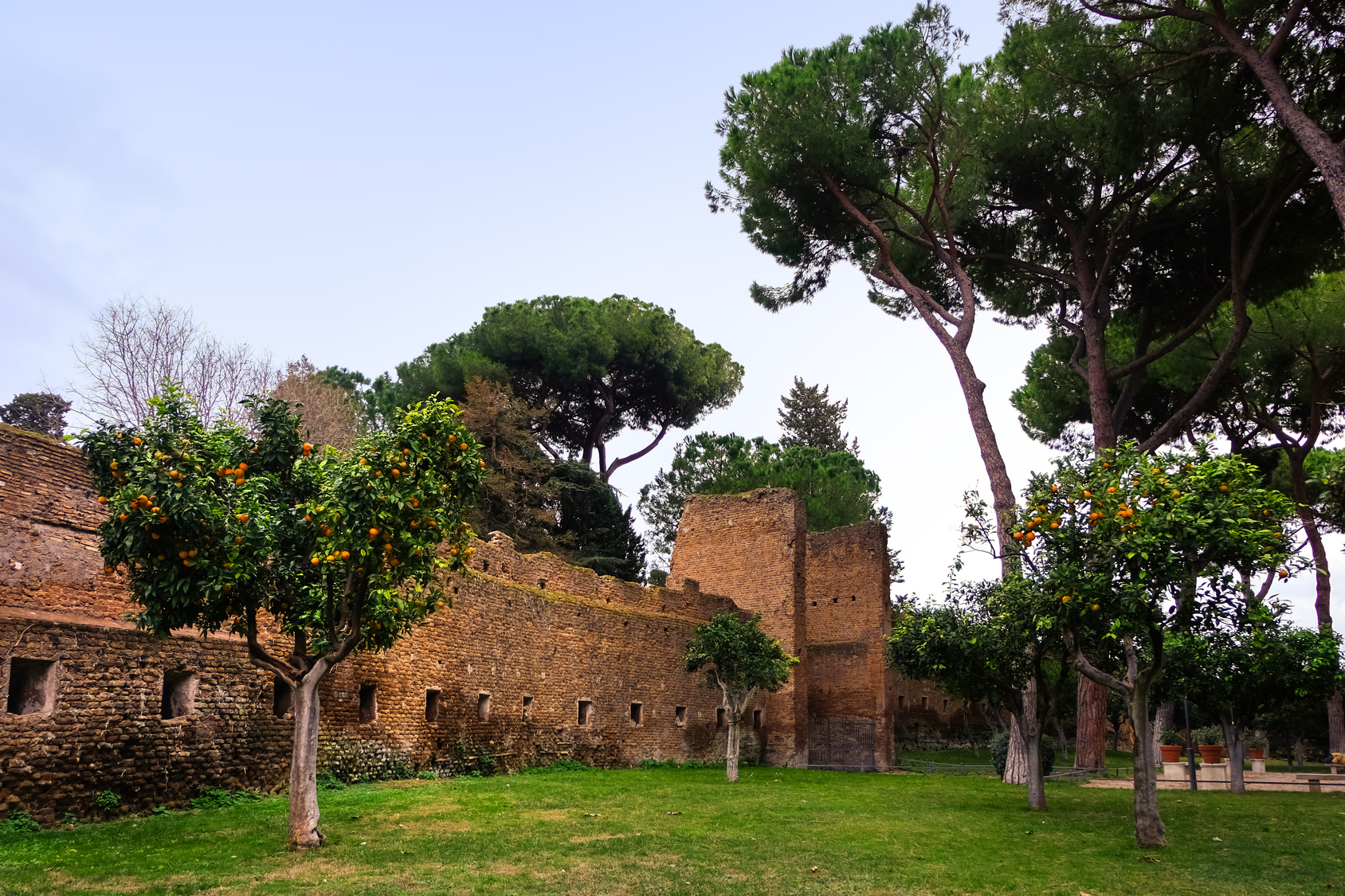
Il giardino degli aranci (Parco Savello) a Roma
In conclusion, the parks of Rome represent a valuable resource that enriches the experience of the city. Whether it’s a relaxing walk, a family picnic, or an outdoor sports activity, these green areas allow you to experience Rome from a different, more authentic and refreshing perspective.
Exploring these urban parks means discovering a lesser-known side of the capital, made of silence, evocative views, and charming hidden corners.