 PORT MOBILITY CIVITAVECCHIA


Coppedè District in Rome: The Fairytale Neighborhood You Must Visit
Coppedè District in Rome: Fairytale Architecture, Art Nouveau & Art Deco – What to See in Piazza Mincio, Fontana delle Rane and Villini delle Fate.


In the grandeur of Rome, just a short distance from Villa Borghese, lies an almost fairytale-like place: the Quartiere Coppedè.
Although commonly referred to as the Coppedè District, it is actually a small architectural complex located within the Trieste neighborhood, specifically between Via Tagliamento, Via Dora, and Piazza Buenos Aires.
Designed and built between 1915 and 1927 by architect Gino Coppedè, it represents one of the most original urban planning experiments in 20th-century Rome.
Comprising around 26 buildings and 17 villas arranged around Piazza Mincio, this unique area is conceived as a miniature fantasy city, where architecture becomes more than just construction—it transforms into storytelling and a permanent visual spectacle for visitors.
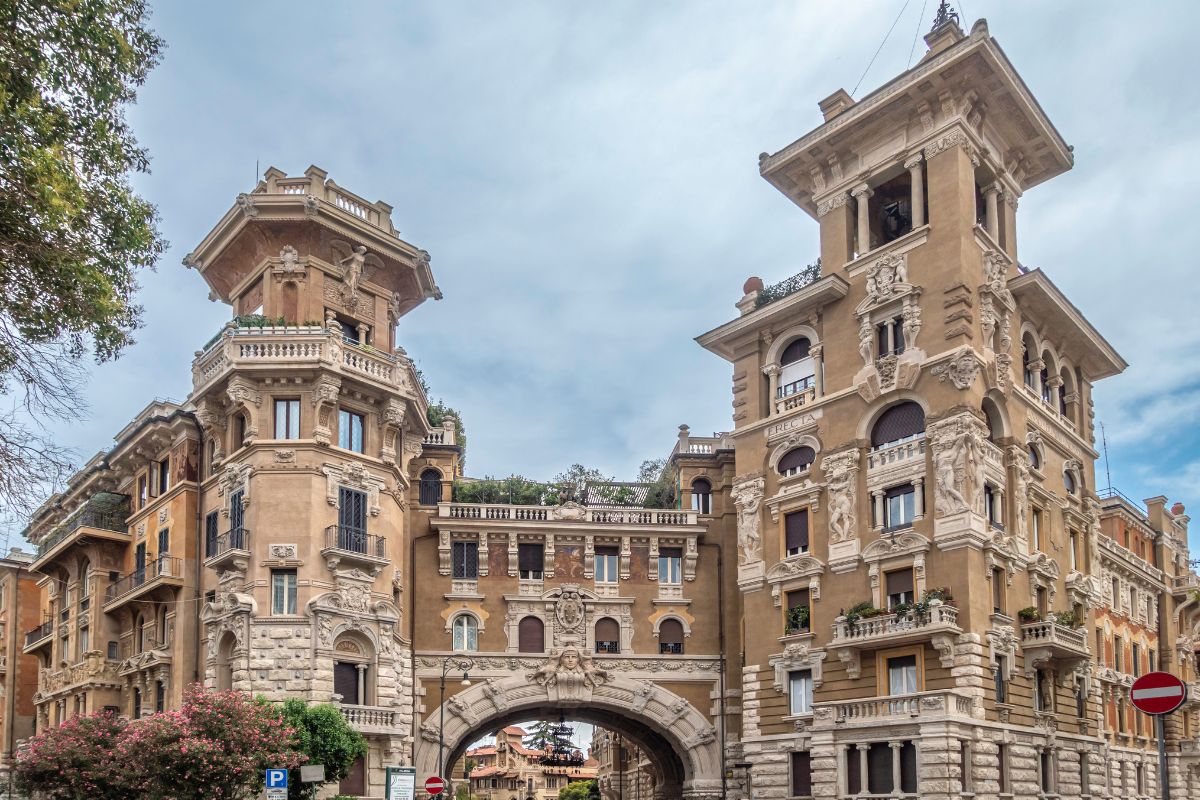
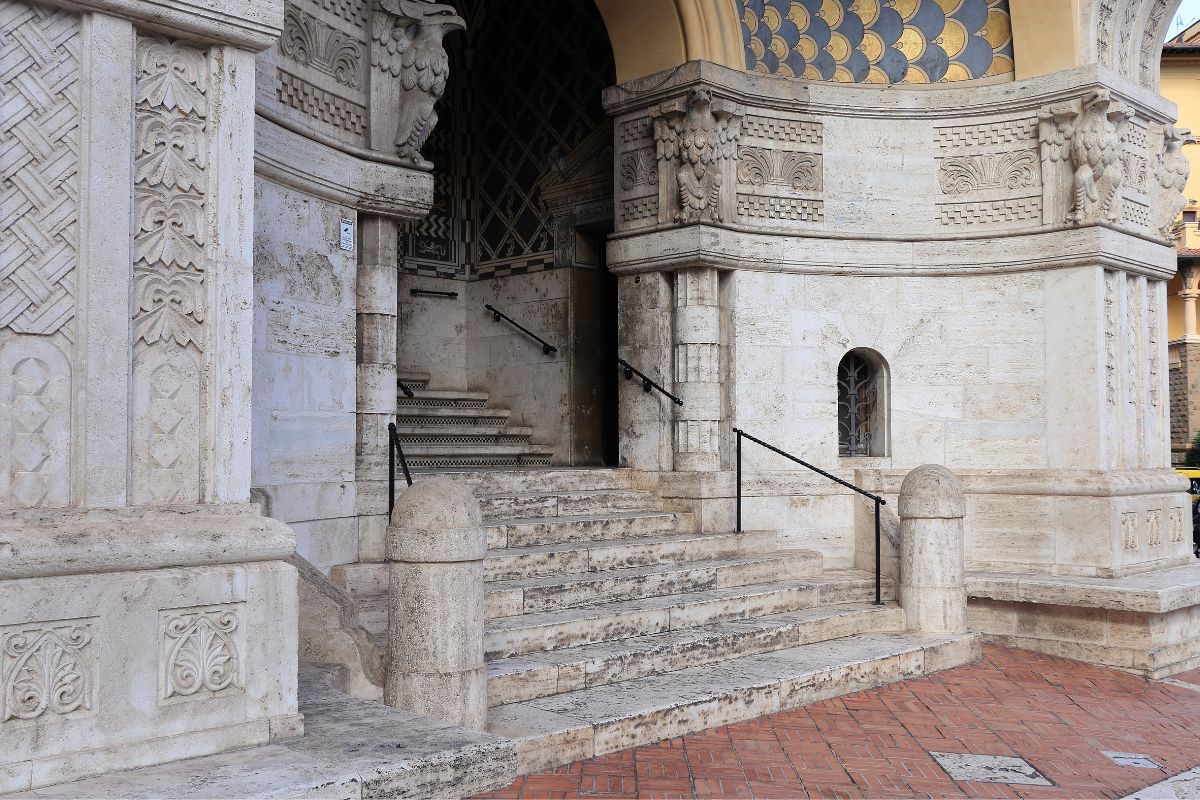
Entrance to Coppedè District in Rome
The Origins of Coppedè District
At the beginning of the 20th century, a real estate company decided to create an elegant residential area for Rome’s emerging bourgeoisie, entrusting the project to architect Gino Coppedè, renowned for his eccentric and richly decorative style.
Coppedè, however, did not limit himself to designing individual buildings; he conceived a true urban microcosm, where architecture, sculpture, and ornamental details merge into a single visual story.
The complex was built during a very unique historical period: Rome was transforming into a modern capital, with architecture seeking new languages that went beyond traditional classicism. At the same time, Italian Art Nouveau (Liberty style) was evolving, combining floral decorations with increasingly geometric and original forms.
The Coppedè District was born as a perfect synthesis of past and future—a creative laboratory where different styles, eras, and inspirations blend harmoniously, giving life to a unique and astonishing architectural world.
Coppedè District: An Extraordinary Variety of Architectural Styles
One of the most fascinating aspects of the Coppedè District is its extraordinary mix of architectural styles, giving its streets a unique and captivating appearance. Within just a few blocks, seemingly contrasting elements coexist harmoniously, creating a visually stunning urban landscape:
A Stunning Blend of Styles in Coppedè District
The Coppedè District showcases an extraordinary fusion of styles: the flowing, decorative lines of Liberty (Art Nouveau), the modern geometric elegance of Art Deco, medieval-inspired arches and towers, Renaissance-inspired details, the grandeur of Baroque, and references to classical Greek art.
This unique mix is no accident—it is the result of a carefully crafted design conceived as a true visual narrative.
A Decorative Statue in Coppedè District – Rome
Every building, façade, and ornamental detail tells a different story, making Coppedè District one of Rome’s most enchanting and photogenic architectural gems.
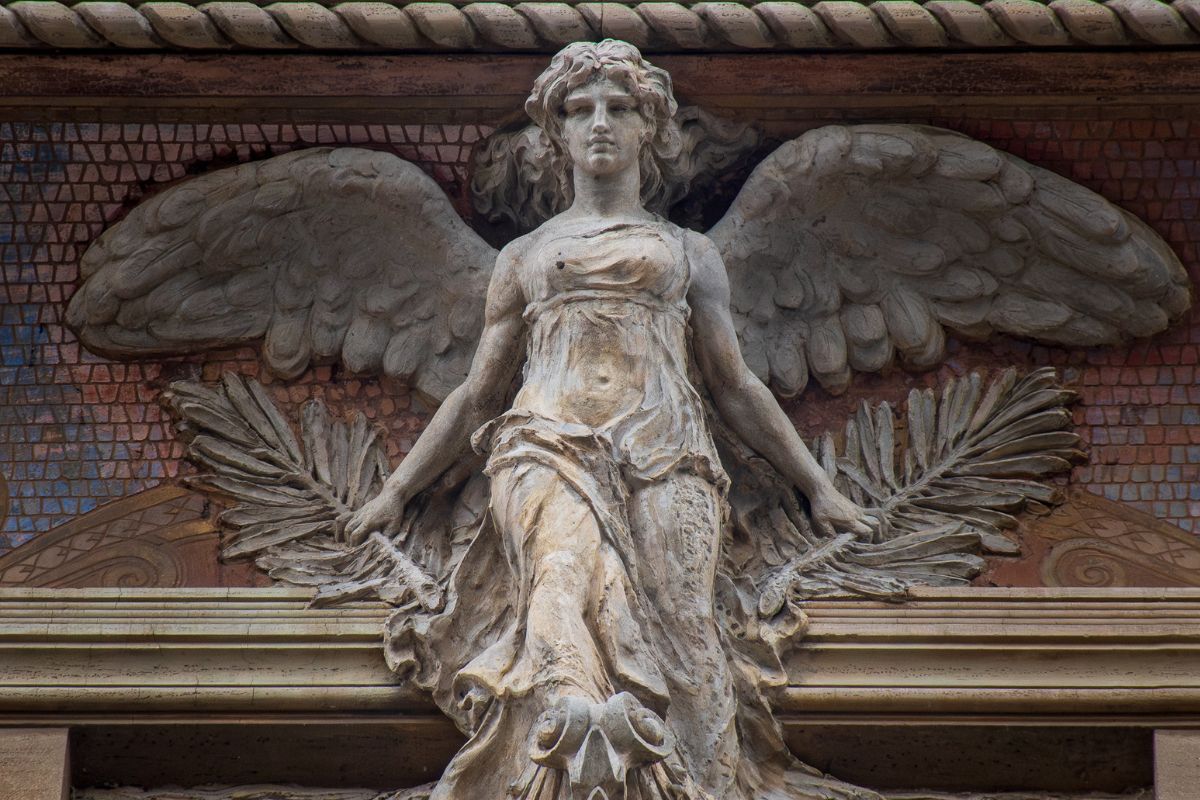
A Decorative Statue in Coppedè District – Rome
The buildings of the Coppedè District almost seem like characters of an urban fairy tale, each with its own character: an irregular balcony that seems to dance in the sunset light, a doorway decorated with bas-reliefs that evoke ancient myths, turrets and loggias that recall fairy-tale castles.
Walking through the streets, one has the feeling of being in a world suspended between reality and imagination, where every view surprises the eye and invites discovering a new hidden detail.
It is therefore no coincidence that art historians describe the Coppedè District as an example of “visionary architecture,” because here architecture ceases to be simple construction and becomes narrative, emotion, and spectacle at the same time.
Coppedè District: What to See
The most spectacular entrance to the Coppedè District is marked by a majestic monumental arch that connects the Palazzi degli Ambasciatori. Passing through it means entering a world suspended between reality and fantasy.
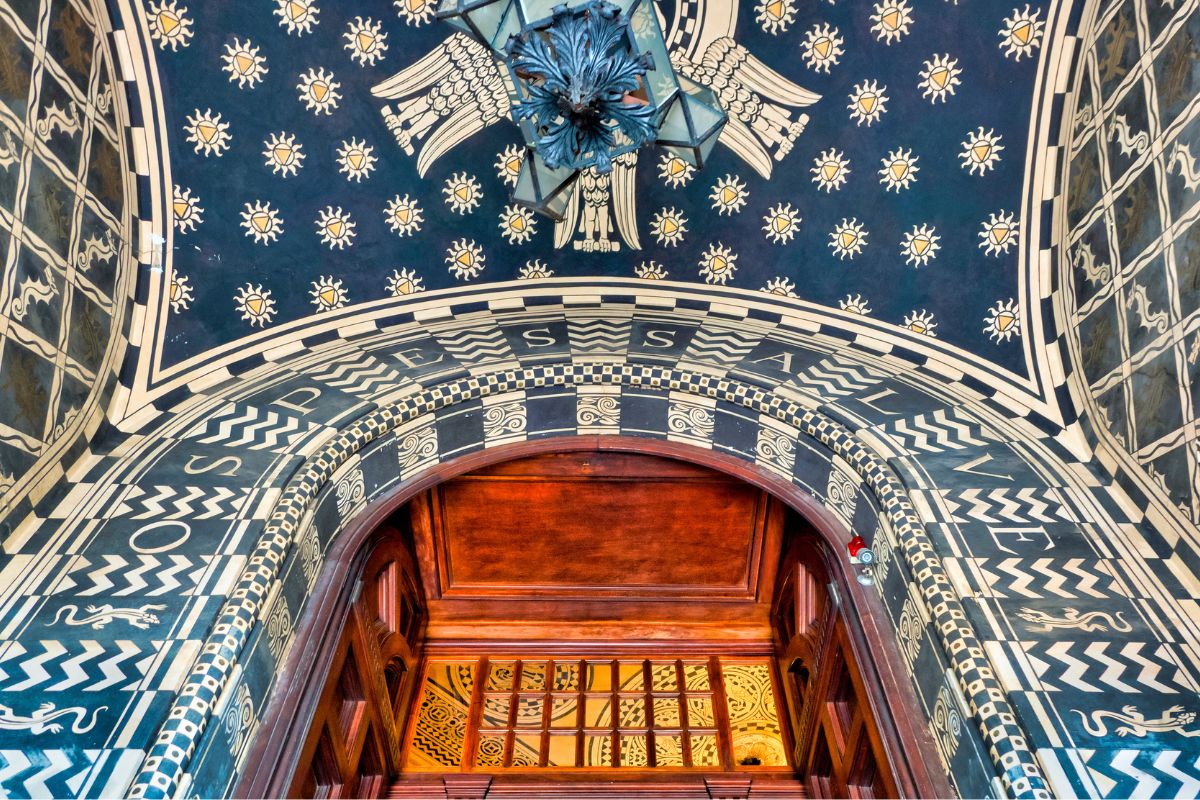
The arch is full of details: noble coats of arms, mythological figures and medieval knights, a carved mask that dominates the scene, a wrought-iron chandelier hanging under the vault, and a small shrine with the Madonna and Child. More than a simple passage, it is a true ritual of entry into a fairy-tale universe.
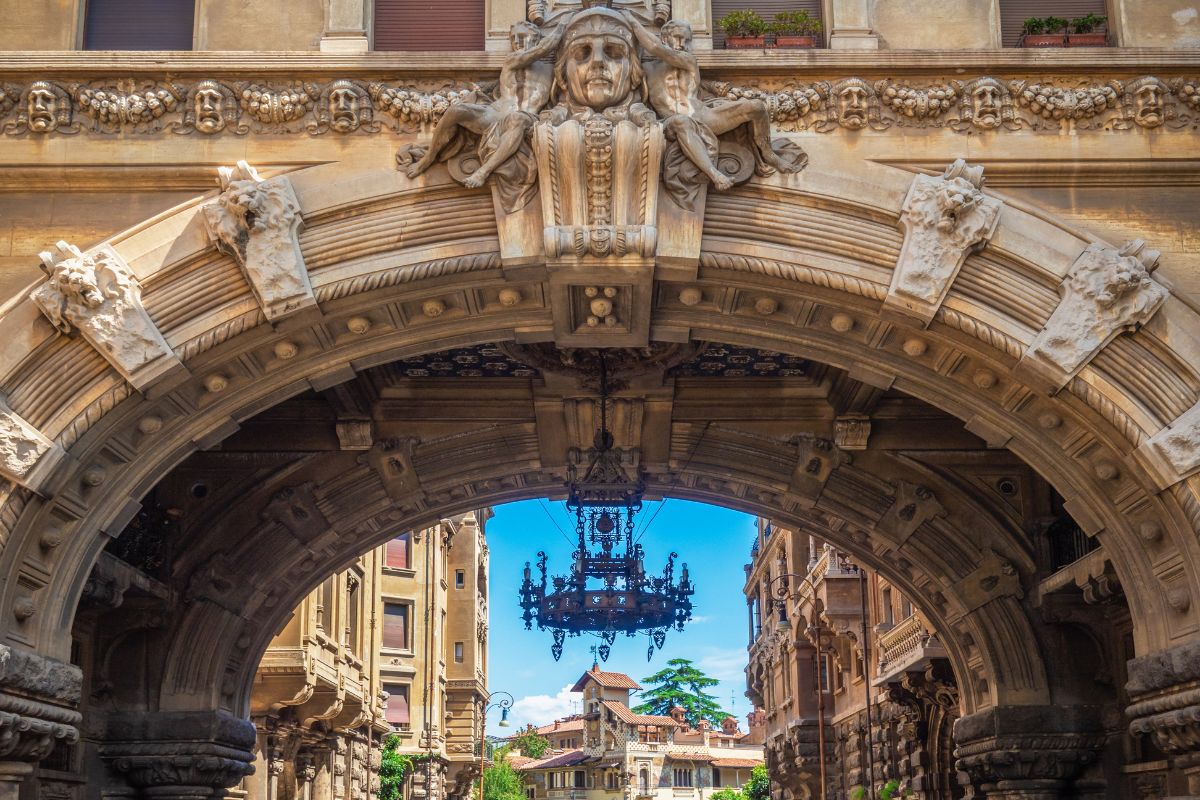
Monumental Arch in Coppedè District – Rome
The heart of the Coppedè District is Piazza Mincio, a circular square from which the streets of the complex branch out. At the center is the famous Fontana delle Rane, designed by Gino Coppedè in 1924.
The fountain, with its circular basin, four groups of figures with shells, and the twelve frogs from which water flows, is a perfect example of the neo-Baroque style, theatrical and richly ornamented.
In the 1960s it became even more famous when The Beatles jumped into it after a concert in Rome.
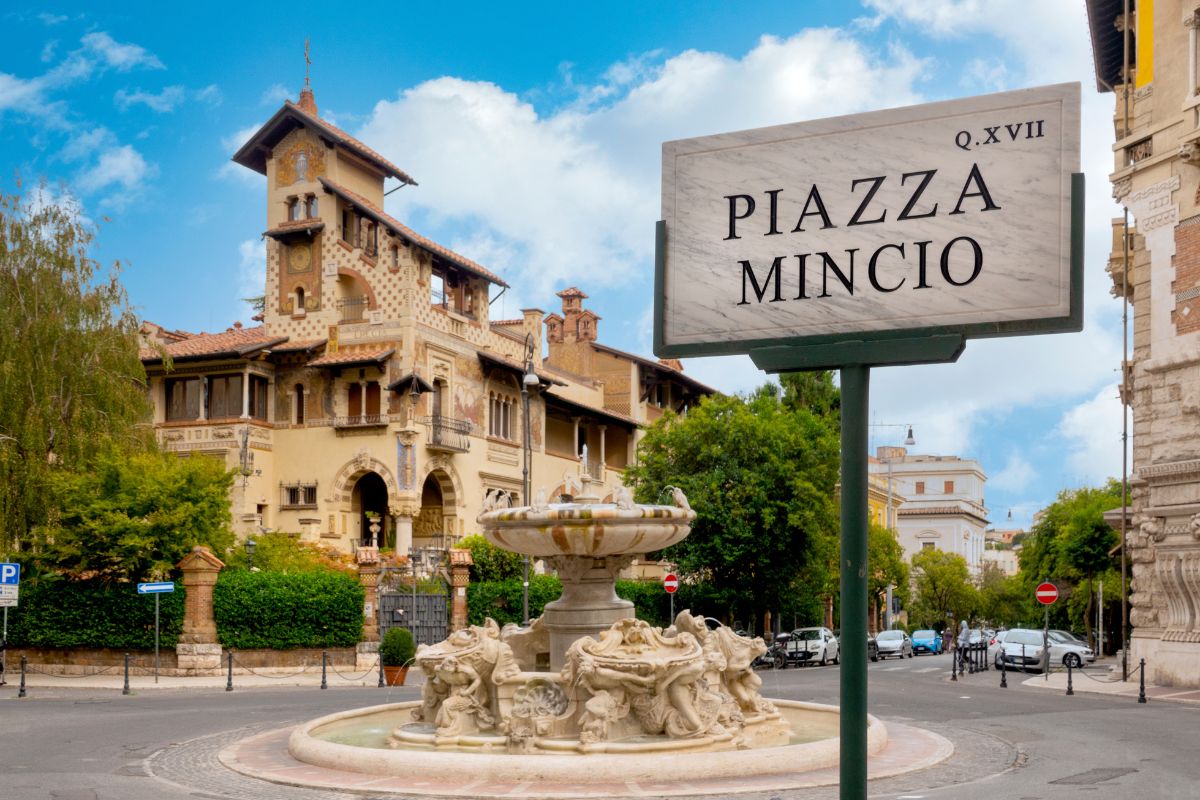
Piazza Mincio, Coppedè District – Rome
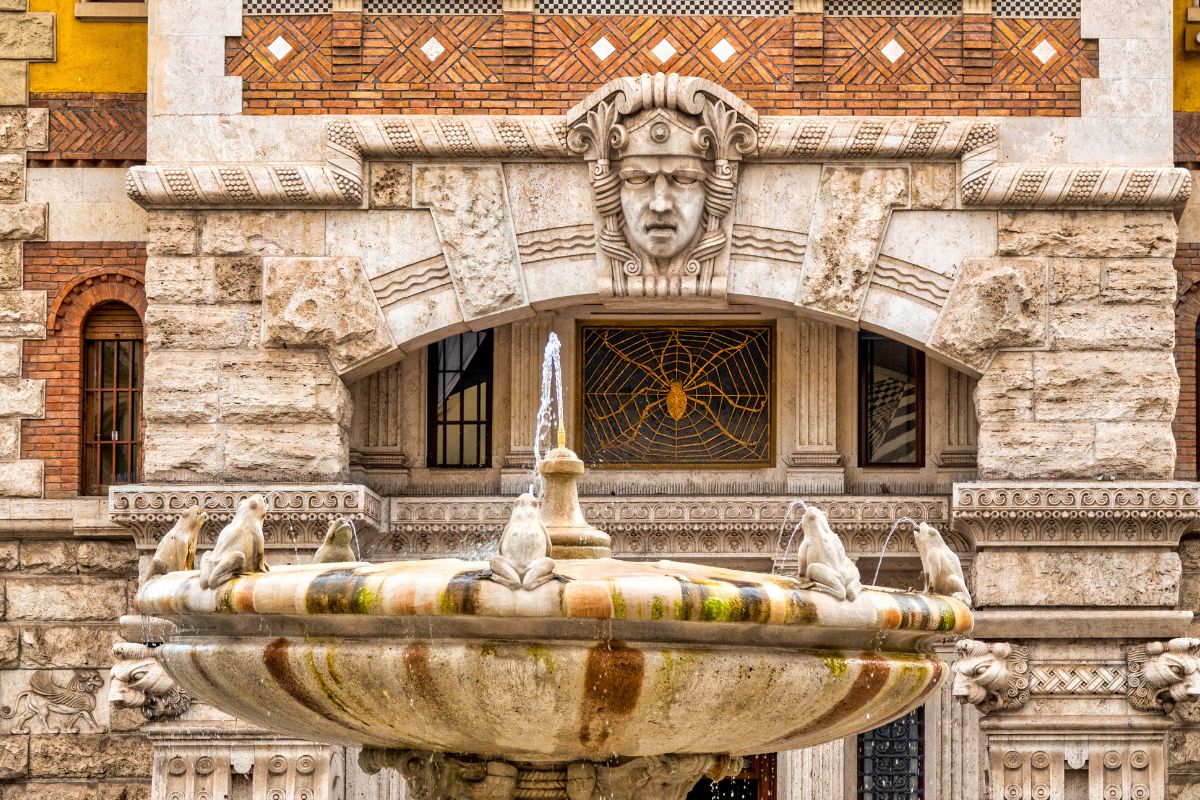
Palazzo del Ragno in Coppedè District – Rome
Overlooking the square is the Palazzo del Ragno, recognizable by the large spider carved above the doorway, a symbol of industriousness.
The façade, enriched with Gothic decorations, mosaics, and ornate windows, perfectly represents the eclectic style of Coppedè, where medieval, Liberty, and symbolic elements merge into a single visual story.
Continuing along Via Aterno, one encounters the evocative Villini delle Fate, considered the masterpiece of the district. Here, medieval turrets, frescoes with Italian coats of arms, mosaics, and decorated balconies create a unique scenic ensemble.
Each villa is dedicated to a city (Rome, Florence, and Venice), transforming the complex into an architectural fairy tale suspended between history and imagination.
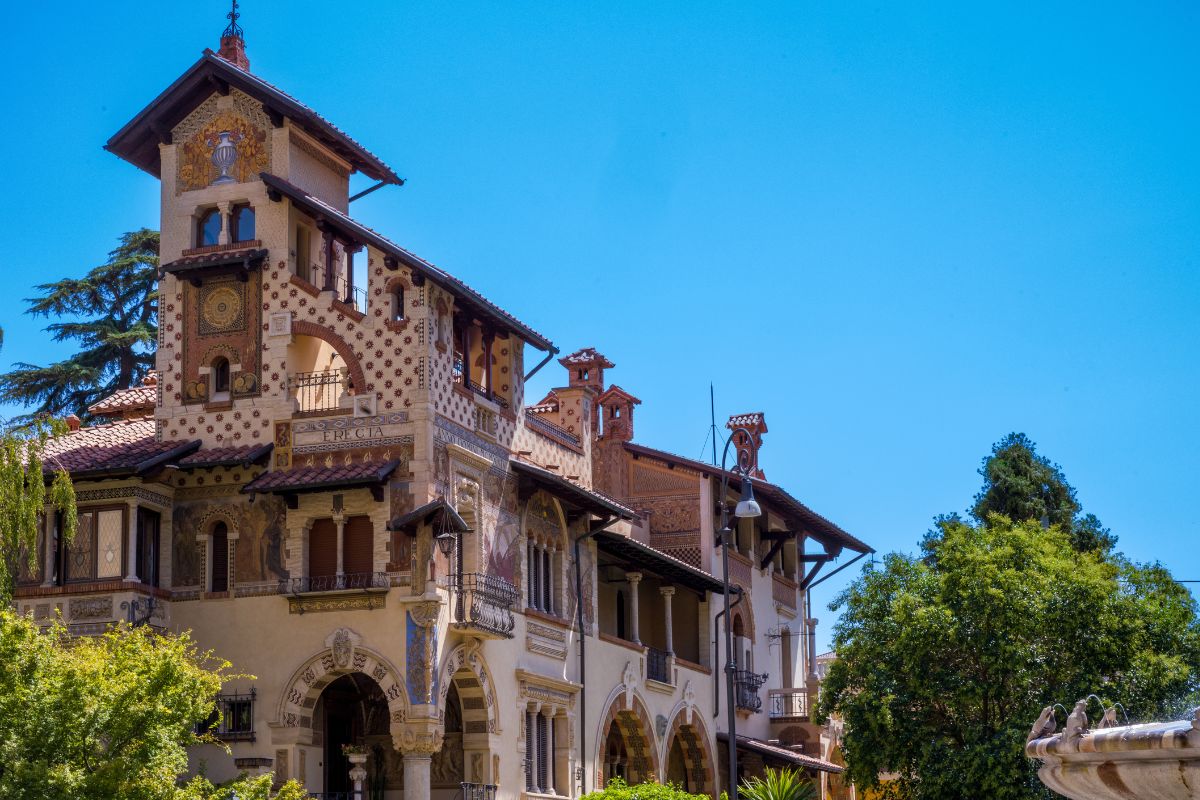
The Villini delle Fate of Coppedè District – Rome
To conclude the visit, it is worth walking around the square to observe the other buildings, including the Palazzi degli Ambasciatori, which show the full variety of the Coppedè style. Among decorated balconies, mythological sculptures, Art Deco elements, and Renaissance and Baroque references, each façade is different from the others.
The Coppedè District is not simply a collection of buildings, but an imaginary world built in stone, designed to be discovered slowly, allowing oneself to be surprised by ever-new details.
Coppedè District: Ideal Visit Duration
Quick: about 30 minutes, to get a first taste of the most iconic details
Complete: about 1 hour, to observe every corner, doorway, and hidden decoration
Where to Take a Break:
In the surrounding streets of the Trieste district, there are numerous small bars and elegant cafés, perfect for relaxing and immersing yourself a little more in the atmosphere of the district.
Where to Stop in Coppedè District – Rome
The Coppedè District is without a doubt one of the most photogenic places in Rome, capable of enchanting both architecture enthusiasts and those seeking postcard-perfect views.
We leave you with one final suggestion: the best times to visit and capture its magic are early in the morning, when the streets are still quiet, at sunset, when the warm light caresses the façades, and in the evening, when the urban lighting creates suggestive and almost fairytale-like atmospheres!
Useful information
Coppedè District
- HOW TO GET THERE
From the Port of Civitavecchia, head to the train station and take the first train bound for Roma Termini.
From Termini Station, the simplest solution is to reach Piazzale dei Cinquecento and take one of the following buses: 63, 83, or 92, which cross the north-east area of the city. After about 20–25 minutes, get off near Via Tagliamento or Piazza Buenos Aires, and from there reach the district with a short walk.
In total, considering waiting times, the journey lasts about one hour and twenty minutes to one hour and forty minutes. This is the most direct and practical route, as the Coppedè District is not served by the subway, so the bus remains the most convenient way to reach it.
- PRICES
Free visit.