 PORT MOBILITY CIVITAVECCHIA


Tuscania: what to see in the medieval pearl of Tuscia
Discover what to see in Tuscania in one day: a practical guide through Romanesque basilicas, the medieval village, and Etruscan treasures.


If you are looking for a village where time seems to have stopped, Tuscania is the ideal destination for your next day trip. Located in the heart of the Viterbo area of Tuscia, less than an hour from the Port of Civitavecchia, this splendid town nestled on tuff hills enchants visitors with its imposing Romanesque basilicas, intact medieval walls, and breathtaking views opening over the Marta river valley.
Whether you are a cruise passenger looking for an unforgettable excursion or a history and Etruscan enthusiast, here is the complete guide on what to see in Tuscania in one day.
1. The Basilica of San Pietro: a cinematic masterpiece
A trip to Tuscania can only begin from the homonymous hill, where the majestic Basilica of San Pietro stands. It is one of the most important and photographed Romanesque monuments in Italy.
- The Rose Window: You will be enchanted by the grandiose central rose window in white marble, surrounded by symbols of the Evangelists and mythological figures.
- The Interior: Divided into three naves by massive columns, it houses a Cosmatesque floor and an evocative nine-aisled crypt.
- On-set trivia: The dramatic beauty of this basilica and its square has bewitched great directors. Cult scenes from movies like Mario Monicelli's L’armata Brancaleone and Franco Zeffirelli's Romeo and Juliet were filmed here.
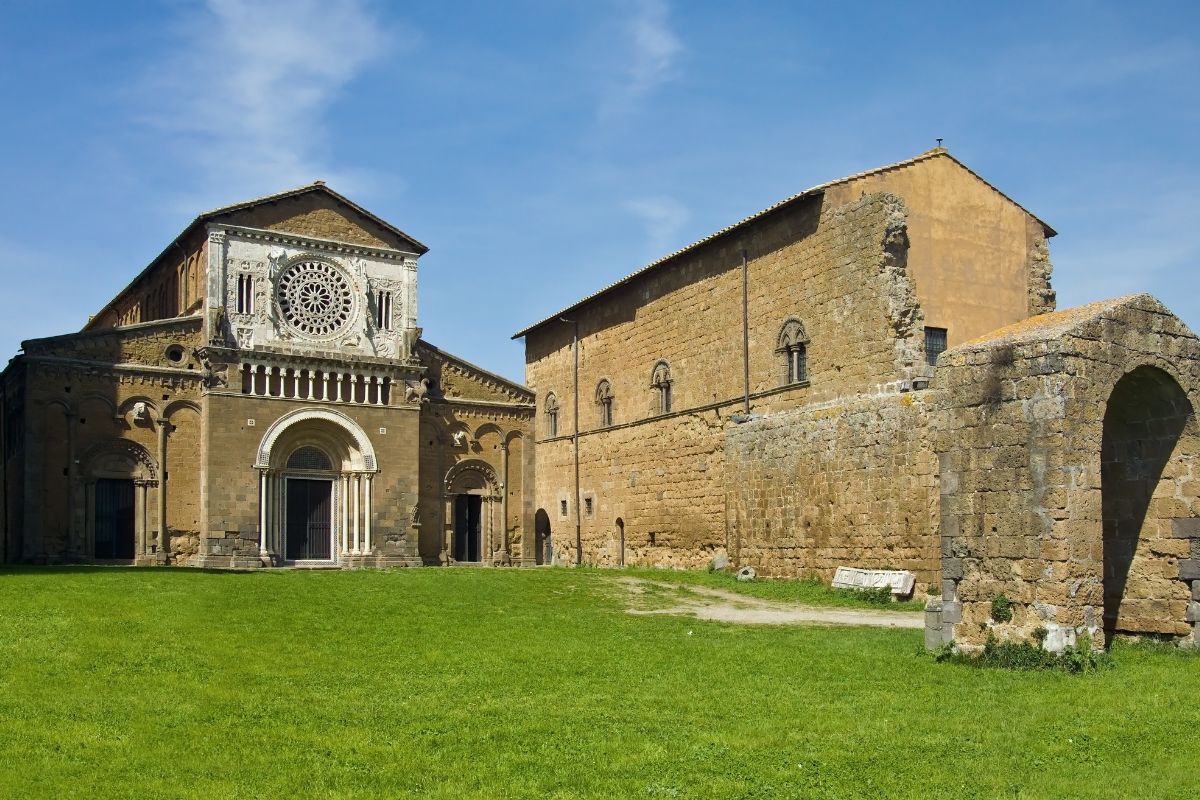
La Basilica of San Pietro - Tuscania
2. The Basilica of Santa Maria Maggiore
Situated on the slopes of the same hill, the Basilica of Santa Maria Maggiore is equally spectacular. Less imposing than San Pietro but extremely rich in detail, it boasts an asymmetrical facade with three finely decorated portals.
Inside, you can admire an immense fresco of the Last Judgment dating back to the 14th century.
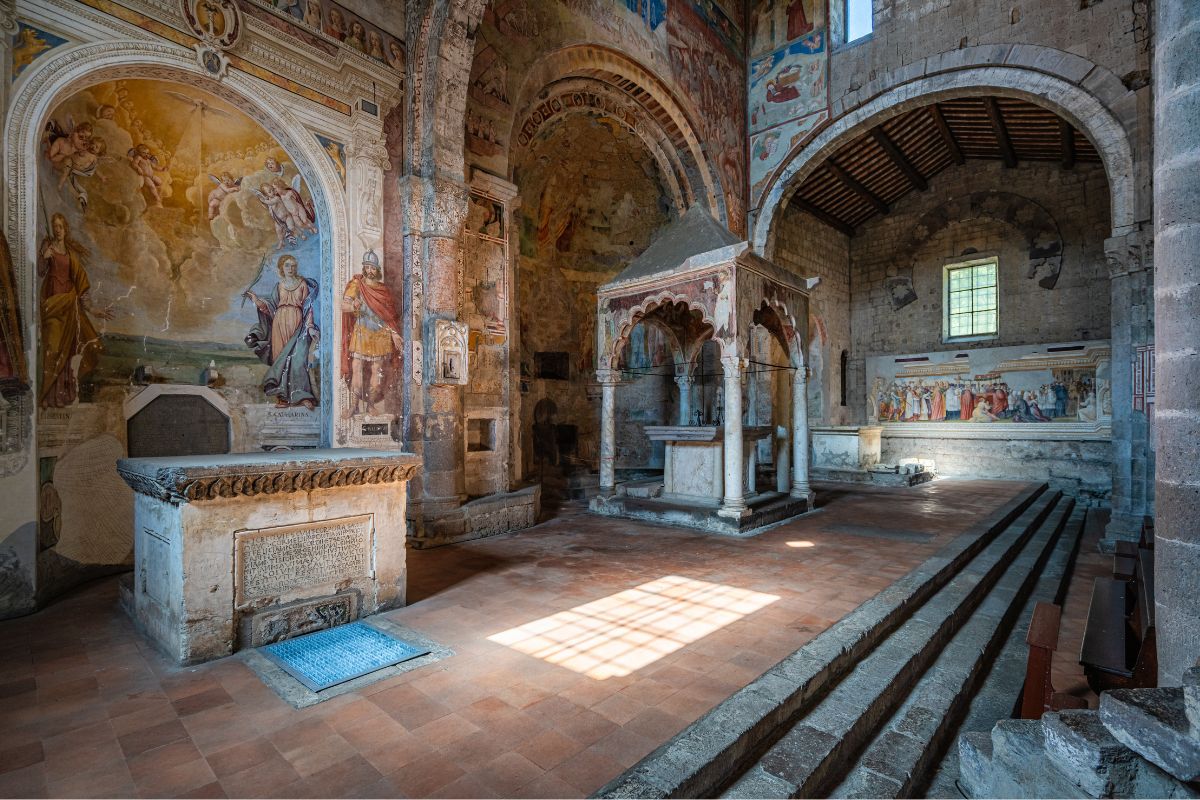
Basilica of Santa Maria Maggiore - Tuscania
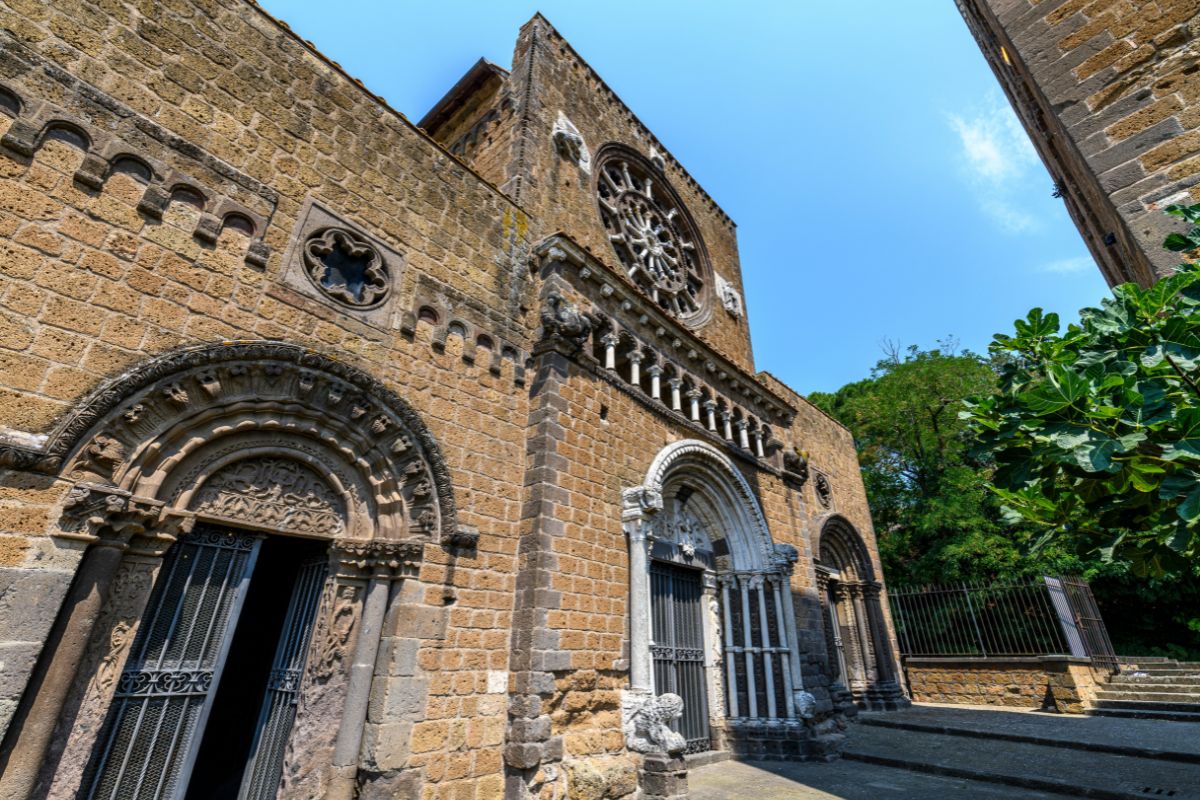
Basilica of Santa Maria Maggiore - Tuscania
3. The Historic Center and the Torre di Lavello Park
Once past the medieval walls that surround the town, you will find yourself strolling through winding alleys, historic fountains, and buildings made of lava stone.
The unmissable stop inside the village is the Torre di Lavello Park. This panoramic garden offers a postcard view of the surrounding valley, the walls, and the silhouettes of the two Romanesque basilicas. It is the perfect place to take a souvenir photo or to enjoy a moment of relaxation in the shade.
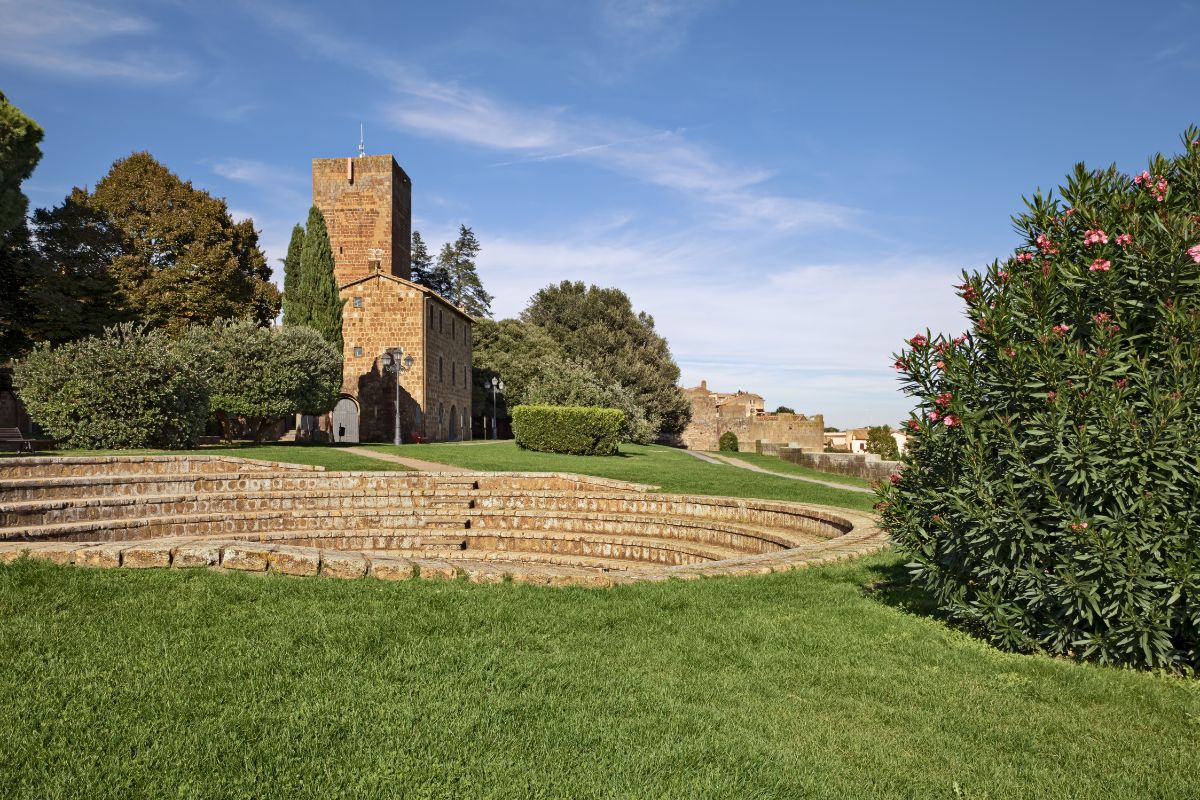
The Torre di Lavello Park - Tuscania
4. National Archaeological Museum and the Etruscans
Tuscania roots itself in the Etruscan era. To discover this fascinating civilization, visit the National Archaeological Museum, housed inside the former convent of Santa Maria del Riposo. Here you will find terracotta and tuff sarcophagi, grave goods, and artifacts from the nearby necropolises (such as the Necropolis of the Madonna dell'Olivo).
- The Etruscan "selfies": On the lids of the sarcophagi belonging to the noble Curunas family, the deceased are sculpted life-sized and in a semi-reclined position (as if at a banquet). The details of hair, jewelry, and even wrinkles are so realistic that they look like actual photographic portraits of the era.
- Dice and makeup: In the display cases of the grave goods, you can see everyday objects from 2500 years ago, including engraved bronze mirrors, perfume bottles, and even playing dice completely similar to ours.
- The cinema cloister: The museum develops around a beautiful frescoed cloister which, just like the rest of Tuscania, has served as a backdrop for several movies and historical TV series.
An extra tip: If the museum fascinates you, just 2 km from the center you can visit the Necropolis of the Madonna dell'Olivo, where you can personally go down into the rock-cut tombs from which many of these artifacts originate.
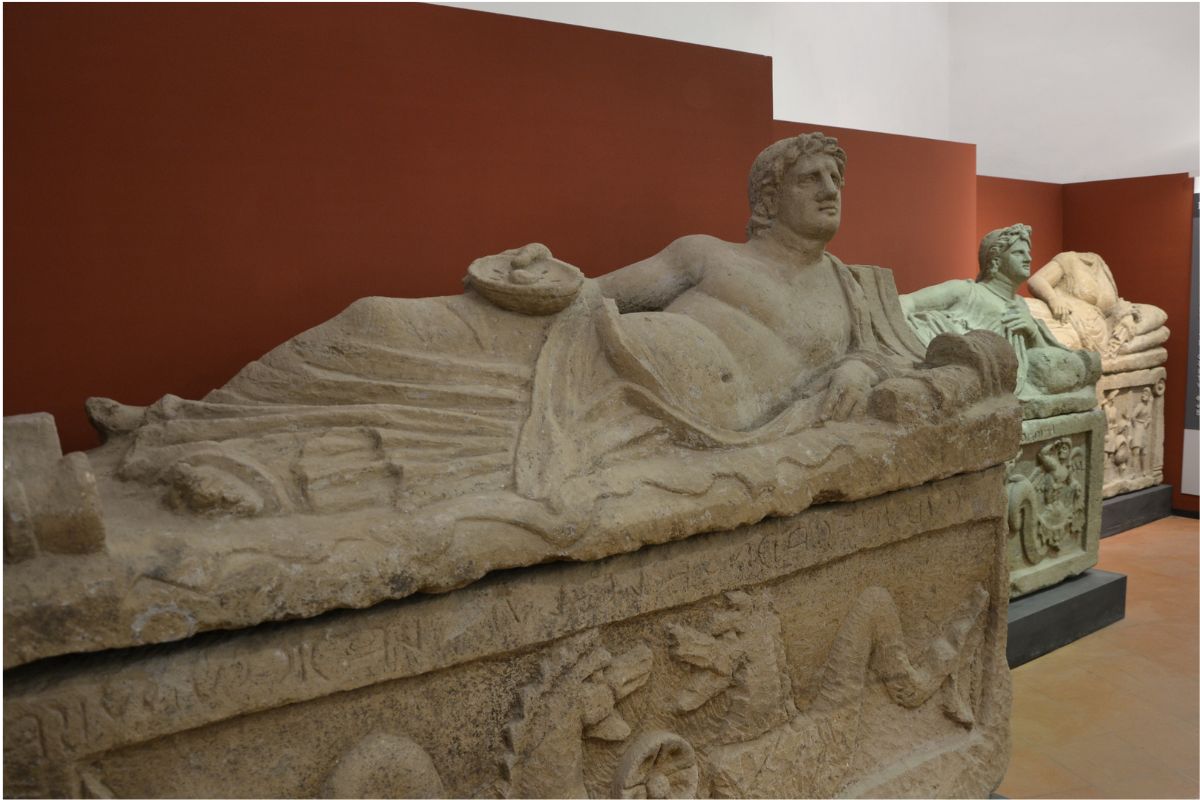
National Archaeological Museum - Tuscania
The common thread with Tarquinia: from paintings to sarcophagi To live a truly complete experience, the advice is to combine Tuscania with nearby Tarquinia, which is just 20 minutes away by car.
In fact, an indissoluble historical link exists between the two cities: if in Tarquinia (famous for its UNESCO Necropolis) you will be left open-mouthed in front of the colorful frescoes that tell of the Etruscan afterlife, in Tuscania you can complete the circle, admiring the monumental tuff and terracotta sarcophagi where those nobles were actually buried.
The two cities form the perfect itinerary for a combined day trip from Civitavecchia: Tarquinia in the morning and Tuscania in the afternoon.
Useful information
When to go: Tuscania is splendid all year round, but spring (May/June) offers the additional spectacle of the lavender bloom, which tints the surrounding countryside purple.
What to eat: Don't leave without having tasted the typical dishes of Tuscia: acqua cotta, pici all'etrusca, and desserts made with local hazelnuts.
Accessibility: The hill of San Pietro can be reached by car with a convenient adjacent parking lot, ideal for those who want to avoid the climb on foot from the center.
- HOW TO GET THERE
How to get to Tuscania from Civitavecchia
Tuscania is easily accessible by car or public transport from the Port of Civitavecchia, making it an excellent choice for a day trip.
-
By Car: Take the SS1 Aurelia towards Tarquinia, then take the SP12 (Strada Dogana) following the signs for Tuscania. The journey takes about 45 minutes.
-
By Bus: From the Civitavecchia train station, it is possible to take the Cotral line buses heading to Tarquinia and transfer to Tuscania, or opt for direct connections from Viterbo.
-
- PRICES
National Archaeological Museum and the Etruscans Price:
The ticket costs only €5 (reduced to €2 for young people between 18 and 25 years old, and it is free under 18 and every first Sunday of the month).